Why I'm Doing This in Public
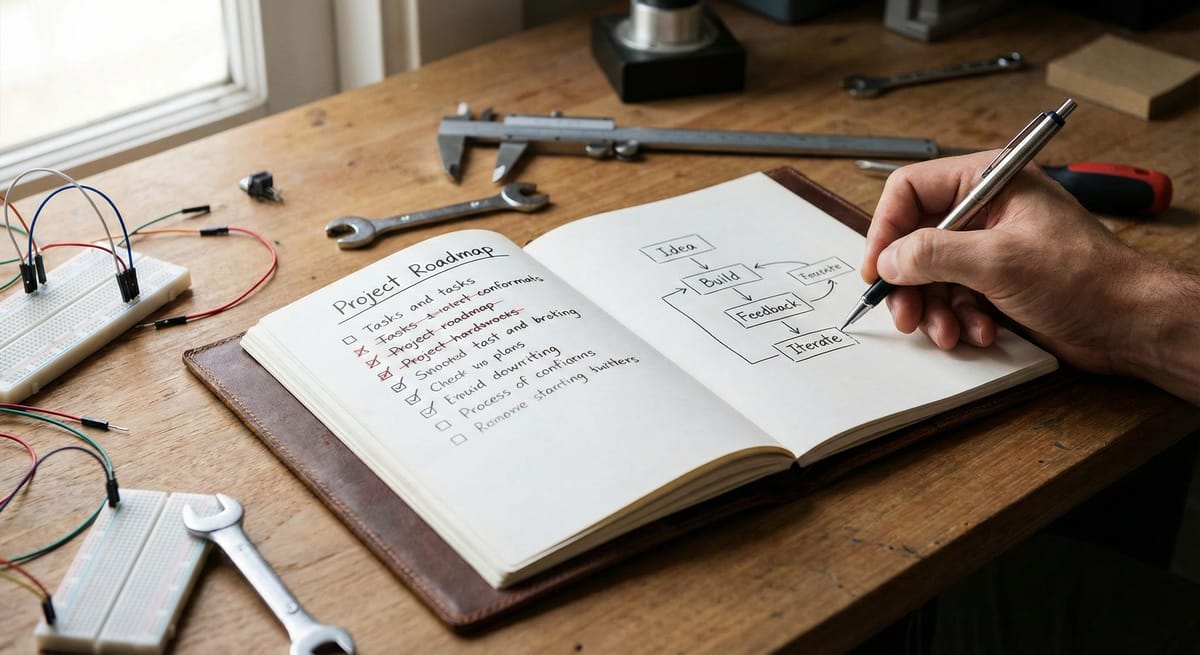
I don't like it one bit. My friends know I'm a private person. But, I believe in something and I think building in public gives it the best odds.
The question I keep getting
After I sold my last company, the most common reaction from friends was some version of: "Congrats, man. So what now — are you done?"
It's a reasonable question. I built InductiveHealth from nothing to a $100+ million valuation, sold a majority stake, and came out the other side with more money than I should ever need. I have a wife I love, two kids who still think I'm sometimes-funny, a small navy's worth of boats, and a lake house. The script says I should be done.
I am not done.
What I actually believe
I believe we're at the beginning of the most important technological shift since the internet. Maybe since electricity. And I believe the decisions being made right now — about who controls AI, who benefits from it, and how humans relate to these systems — will shape the next fifty years.
I also believe most of those decisions are being made by people who aren't thinking about your business, your family, or your freedom. They're thinking about their market cap.
That bothers me.
I think there's an opportunity to build AI systems that actually serve the people using them. That keep humans in the loop — not as a safety checkbox, but because humans plus AI is genuinely better than AI alone. That treat your data as yours, not as training material for someone else's model.
I think the independent business owner — the person running a 50-person company, juggling payroll and strategy and customer calls — deserves the same AI leverage that Fortune 500 companies are getting. And I think they deserve it on terms that don't require surrendering their data, their autonomy, or their people to get it.
That's what I'm building. That's the why.
Why in public
Now for the part that makes me uncomfortable.
I'm not a natural sharer. My instinct after decades in business is to keep my cards close. Protect the idea. Don't give away the playbook.
But I've been thinking about this differently.
The best founders I know — the ones building things that actually matter — tend to work in the open. Not because they're extroverts or content creators. Because building in public does three things that building in private can't:
It creates accountability. When I write down what I'm doing and why, I can't hide from bad decisions. If I say "we're going to validate demand with $50 deposits" and nobody deposits, that's information I have to confront publicly. That's useful pressure.
It attracts the right people. The partners, customers, and collaborators I want are people who share my values. They can't find me if I'm invisible. Putting my thinking out in the world is the fastest filter for finding people who care about the same things.
It compounds. Every post is a tiny asset. A year from now, someone will find this blog and read through the whole arc — the early bets, the pivots, the mistakes, the wins. That body of work will be worth more than any pitch deck I could ever build.
I stole this logic from a dozen people smarter than me. But the version that sticks is simple: if you're building something you believe in, silence is a competitive disadvantage.
What "DOS" means
The name of this blog — Dollacker Operating System — is a little self-important. I know that. But it's deliberate.
An operating system is the layer between hardware and applications. It manages resources, sets priorities, handles conflicts, and makes everything else possible.
That's what I'm trying to build for myself: a system for deciding what matters, where to spend time, how to think about risk, and when to move. The "operating system" is the collection of principles, habits, and frameworks that turn ambition into action.
DOS is that system, made visible. You'll see the strategic thinking, the business decisions, the personal philosophy, and — inevitably — the screw-ups. All of it.
I'm 46. I've had a major exit. I have resources, a network, and a clear-eyed view of what I want. If I can't be honest about the process of building something from this position, when exactly would be the right time?
What's coming
I'm building several things under my company, Future Obvious:
Force Multiplier AI — a platform for AI employees with human oversight. Managed workflows, defined roles, predictable outputs. We're in active development with design partners now.
Moltiplier.ai — managed deployment of autonomous AI agents (like OpenClaw) with the organizational controls that businesses need. If Force Multiplier is the structured workhorse, Moltiplier is the wild mustang — with a saddle and reins.
And underneath both of them, a longer-term vision for how data should work — one where your business data creates value for you, not for the platforms you hand it to. More on that when the time is right.
I'll document the whole journey here. The wins, the dead ends, the things I learn along the way.
If you run a business and you're trying to figure out how AI fits, follow along. If nothing else, you'll get to watch someone with no excuses left try to build something that matters.
— Matt